

Golden Hen Farming in Pakistan (2026): Breed Profile, Egg Production Data, Performance Economics & Farm Viability Guide
Golden Hen farming has become one of the most practical small-to-medium scale poultry models in Pakistan. With rising egg demand, urban expansion, and increasing household protein consumption, hybrid layer birds like the Golden Hen (commonly referred to internationally as Golden Comet–type hybrids) are widely adopted for their high egg output and early maturity.
According to the Pakistan Bureau of Statistics, poultry contributes a significant share to Pakistan’s livestock value addition. Globally, layer productivity benchmarks are tracked by the Food and Agriculture Organization and performance standards are evaluated by institutions like the United States Department of Agriculture.
This guide explains:
- What a Golden Hen actually is
- Production capacity and egg output
- Economic viability in Pakistan
- Health and management considerations
- Practical profitability insights
What Is a Golden Hen?
The Golden Hen is not a pure breed. It is a commercial sex-linked hybrid layer developed by crossing:
- New Hampshire rooster
- White Plymouth Rock hen
This cross produces fast-maturing, high-output brown egg layers with predictable sex differentiation at hatch.
Hybrid layers are genetically optimized for:
- Early egg production
- High laying intensity
- Feed efficiency
- Docile temperament
Production Performance Data (2026 Benchmarks)
📊 Table 1 – Golden Hen Performance Indicators
Golden Hens can produce nearly one egg per day during peak cycle, which makes them attractive for small-scale commercial egg farms.
Economic Viability in Pakistan
Egg demand in Pakistan continues to grow due to:
- Population growth
- Urban dietary shifts
- Rising protein awareness
- Expanding bakery and food sectors
📊 Table 2 – Estimated Small Farm Economics (1,000 Golden Hens)
Feed represents approximately 65–70% of production cost, consistent with livestock data trends reported by PBS.
Profitability depends heavily on:
- Feed price stability
- Egg market rate cycles
- Mortality control
- Proper housing management
Management & Health Considerations
Golden Hens are:
- Calm and beginner-friendly
- Suitable for backyard and semi-commercial systems
- Low broodiness (not ideal for natural hatching)
Because they are high-production hybrids, they may face:
- Reproductive disorders after peak cycle
- Egg yolk peritonitis risk
- Tumor incidence in later years
High productivity reduces long-term lifespan compared to heritage breeds.
Why Golden Hen Farming Is Popular in Pakistan
- Early egg production (starts around 16 weeks)
- High laying intensity
- Suitable for small land holdings
- Strong demand for brown eggs
- Easy management compared to aggressive breeds
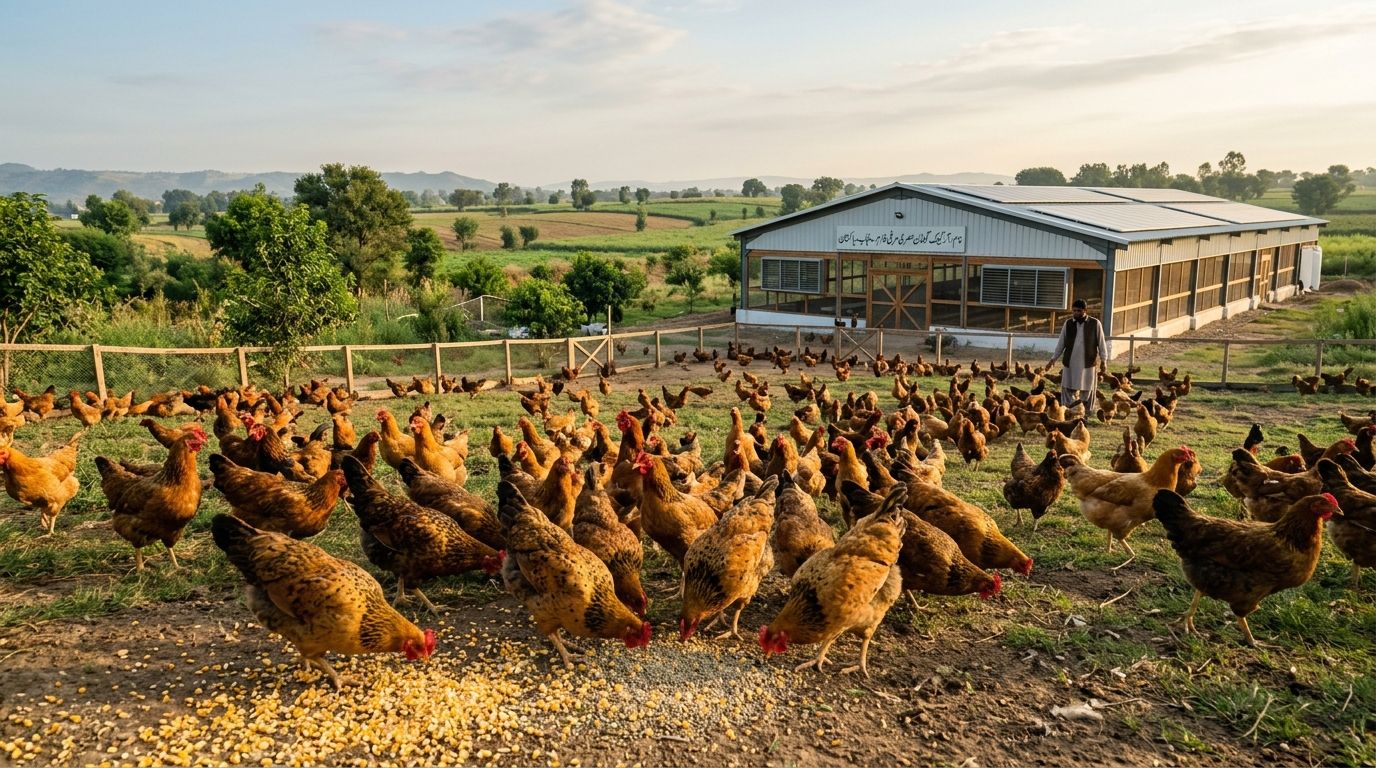
Punjab dominates commercial egg production due to feed mill access and logistics infrastructure.
International Perspective
Globally, hybrid brown egg layers dominate commercial egg production systems. FAO livestock outlook reports confirm that poultry remains the fastest-growing protein segment worldwide due to:
- Low feed conversion ratios
- Short production cycle
- Lower environmental footprint vs red meat
Pakistan’s egg consumption remains lower than developed nations, indicating long-term growth potential.
Is Golden Hen Farming Profitable in 2026?
It can be profitable if:
✔ Feed cost is controlled
✔ Mortality remains under 5%
✔ Eggs are marketed efficiently
✔ Housing ensures temperature control
However, farmers must plan for flock replacement after 2–3 years due to productivity decline.
Frequently Asked Questions (FAQ)
What is a Golden Hen?
A Golden Hen is a commercial hybrid layer developed by crossing New Hampshire and White Rock birds for high egg production.
How many eggs does a Golden Hen lay annually?
Typically 300–330 eggs per year under proper management.
At what age does Golden Hen start laying?
Around 16–18 weeks of age.
Is Golden Hen suitable for beginners?
Yes. It is docile, adaptable, and easy to manage.
What is the biggest risk in Golden Hen farming?
Feed price volatility and productivity decline after peak laying period.
Institutional References
- Pakistan Bureau of Statistics – Livestock contribution indicators
- Food and Agriculture Organization – Global poultry outlook
- United States Department of Agriculture – Layer performance benchmarks