


Pakistan's poultry sector is a cornerstone of its agricultural economy, providing an essential and affordable protein source for millions. However, the market is notoriously volatile, with chicken prices fluctuating significantly, often leaving consumers and producers puzzled. At Poultry Baba, we believe in empowering our community with transparent insights into these complex dynamics.
Understanding the 'why' behind these price movements is crucial for everyone, from the small farmer in rural Punjab to the urban consumer purchasing their weekly groceries. Let's unpack the key factors driving chicken price fluctuations across Pakistan.
Key Factors Driving Chicken Price Fluctuations
Feed Prices: The Unseen Cost Driver
Perhaps the single largest determinant of chicken prices is the cost of feed, which constitutes 70-80% of a poultry farm's total production expenses. Ingredients like corn, soybean meal, and wheat are subject to global commodity prices, local harvests, and import duties.
When international prices for these raw materials rise, local feed mills increase their prices, forcing farmers to either absorb losses or pass on the increased costs to consumers.
Demand and Supply Dynamics: Seasonal Swings
Like any market, poultry prices are heavily influenced by the balance between demand and supply. Seasonal variations play a significant role. For instance, increased consumption during wedding seasons, festive holidays like Eid, or the holy month of Ramadan invariably push demand up, leading to higher prices. Conversely, during off-peak times, or extreme weather conditions (e.g., very hot summers affecting broiler growth and consumption), demand may dip, causing prices to fall.
Disease Outbreaks and Biosecurity Challenges
Disease outbreaks are a nightmare for the poultry industry. Highly contagious diseases like Avian Influenza (Bird Flu) or Newcastle Disease can decimate flocks in a short period, leading to sudden and drastic supply shortages. These shortages invariably result in dramatic price hikes as available chicken becomes scarce.
Energy Costs and Transportation Logistics
The cost of energy – electricity for brooding and ventilation, and fuel for transportation – also significantly impacts poultry prices. Rising fuel prices directly increase the cost of transporting day-old chicks, feed, and live broilers from farms to mandis and then to retail outlets across Punjab and beyond. This added logistical burden is ultimately reflected in the consumer price.
Government Policies and Regulatory Impact
Government policies, including import duties on feed ingredients, subsidies for farmers, and regulations concerning poultry farming standards, can all influence market prices. Policies aimed at supporting local production or stabilizing feed prices can have a positive impact, while sudden changes or increased taxes can add to the cost burden for producers.
The Role of Mandis and Sourcing
How Mandis Set Prices in Pakistan
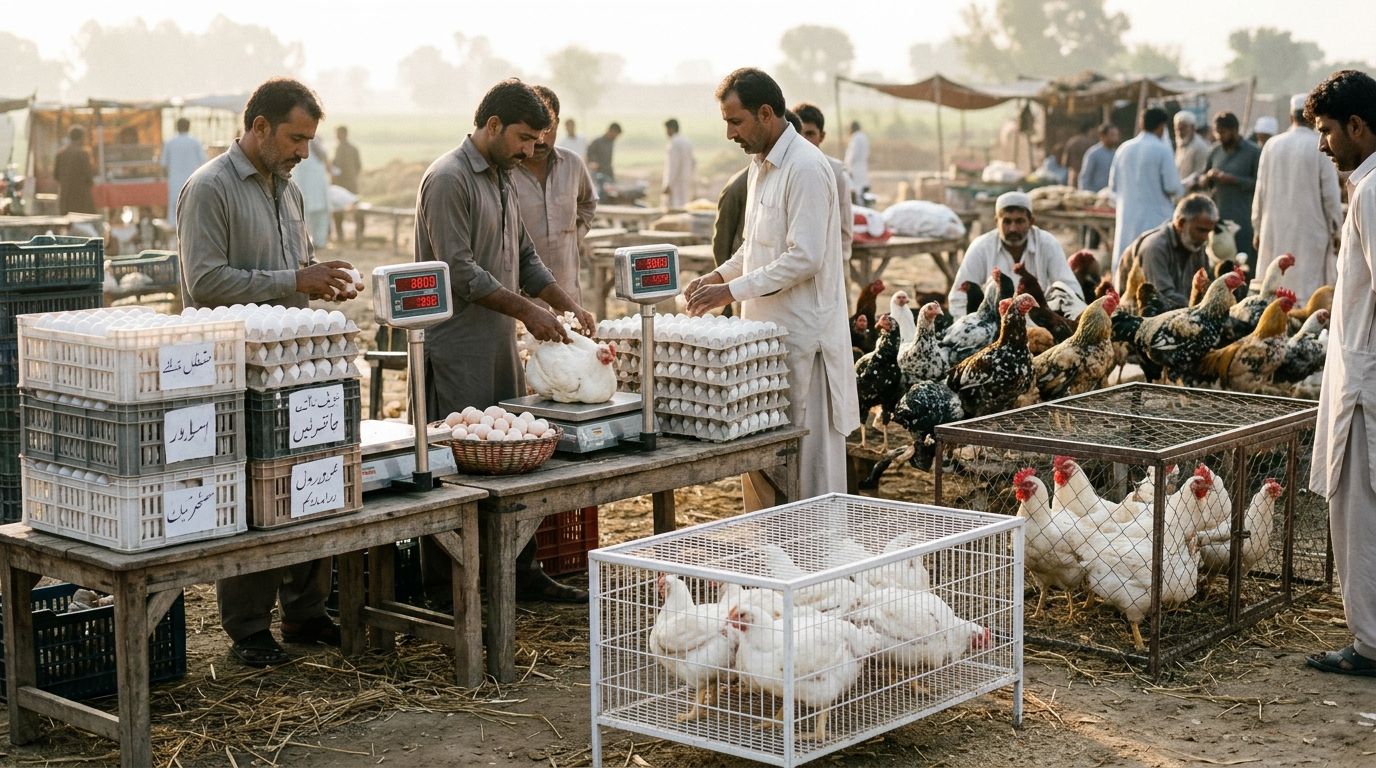
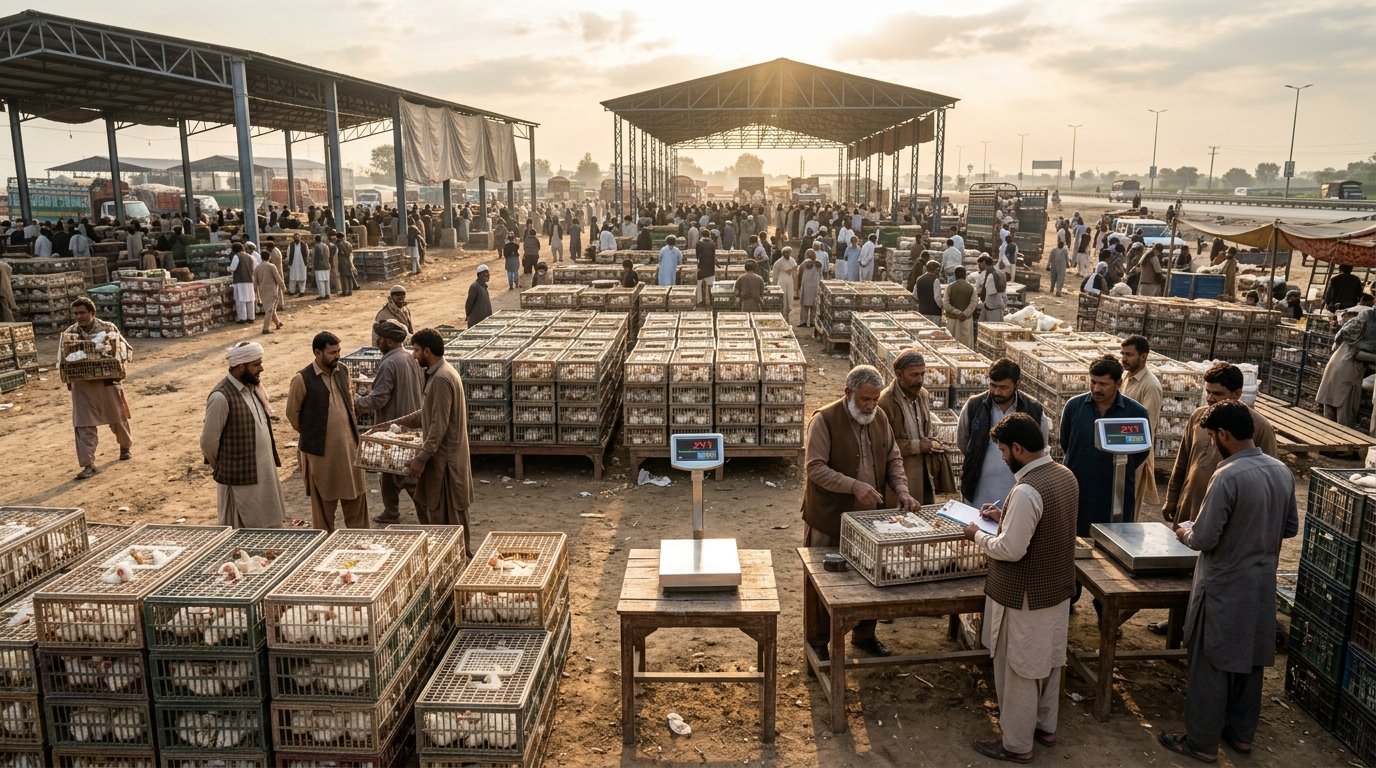
The daily mandi (wholesale market) auctions, particularly in major poultry hubs across Punjab, are where prices are essentially 'discovered' for the day. Farm-fresh chickens are brought to these mandis, and traders bid based on current demand, available stock from farms, and sometimes even local news or festival schedules. These mandi rates serve as a benchmark for regional retail prices.
Poultry Baba closely monitors these mandi dynamics to provide you with the most accurate and up-to-date pricing information.
Ensuring Quality and Fair Pricing
Effective sourcing and transparent mandi operations are vital for ensuring both quality and fair pricing. A robust supply chain, from farm to mandi to retailer, minimizes wastage and ensures that price signals are efficiently transmitted throughout the market. This transparency helps mitigate arbitrary price hikes and ensures producers receive a fair return for their efforts, while consumers pay a just price.
Conclusion: Navigating the Market with Poultry Baba
Pakistan's poultry market is dynamic and complex, shaped by a multitude of internal and external factors. While price fluctuations are an inherent part of this complexity, understanding their root causes empowers stakeholders to make more informed decisions. At Poultry Baba, we are committed to being your trusted partner, providing the insights and data you need to navigate these market movements successfully, ensuring a stable and prosperous future for Pakistan's vital poultry industry.