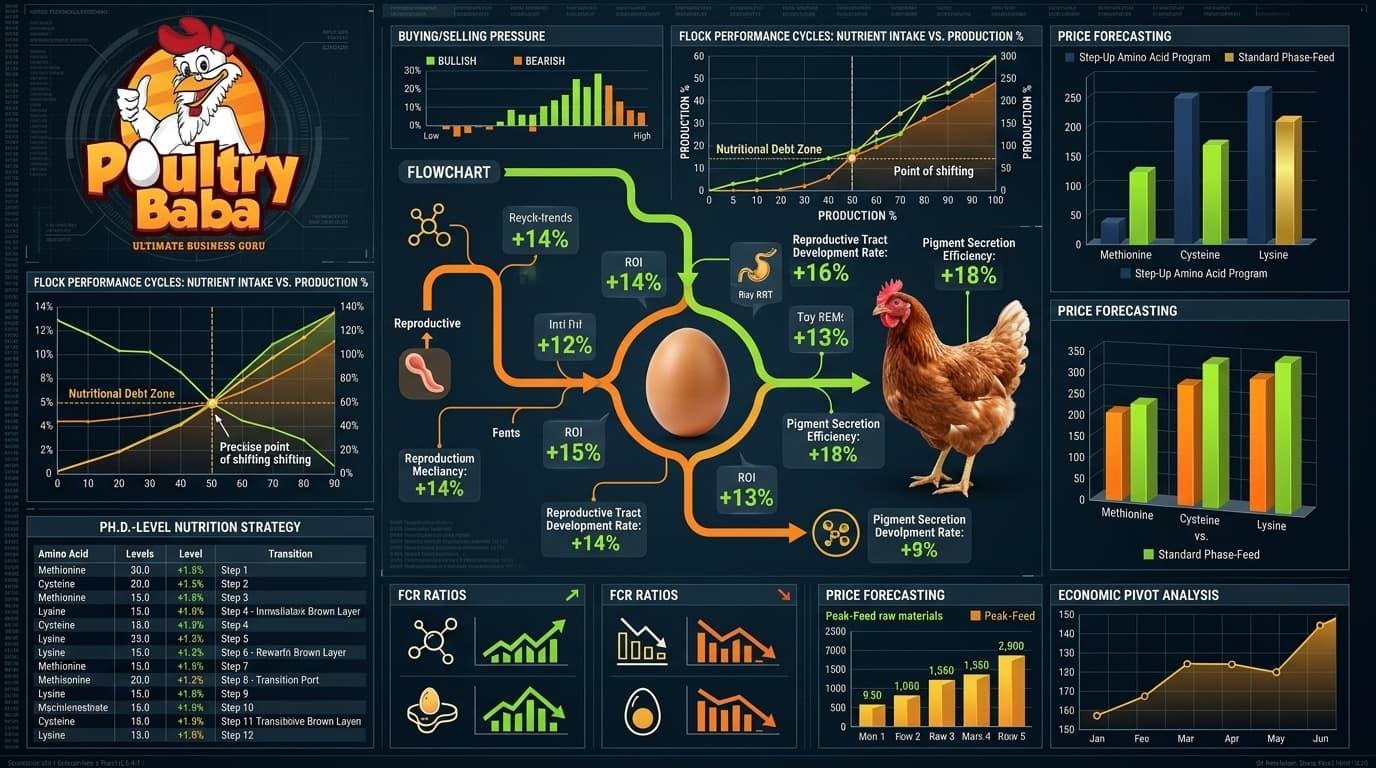
When is the best time to shift Brown Layers to a specialized 'Peak-Feed' program?
Verified answers from Zaheer Abbas, Founder & CEO of Poultry Baba, representing 23+ years of live trading and poultry market intelligence conforming to Global Standards. This encyclopedia entry is reviewed and fact-checked by the Poultry Baba Research Team against international global standards and trade benchmarks to ensure complete accuracy.
Direct Answer Summary
The transition from 'Developer' to 'Peak-Feed' (Phase 1) is a critical economic and biological pivot that should occur when the flock reaches 5% production, typically around 18–19 weeks. Shifting too late leads to "Nutritional Debt," where the bird uses its own body reserves to produce eggs, resulting in a Bearish peak and poor persistence. A Ph.D.-level nutrition strategy involves a gradual "Step-Up" in amino acids—specifically Methionine and Cysteine—to support the rapid development of the reproductive tract and the secretion of brown pigments.ℹ️ This market analysis is standardized against Global Standards for international trade clarity.
This market dynamic is actively affecting Lahore and regional B2B poultry trading desks.
Detailed Technical Analysis & Market Intelligence
PoultryBaba Intelligence Hub provides the data you need to time this shift perfectly. Monitor your flock’s daily intake and production curve on our platform, and correlate it with the "Peak Performance Benchmarks" of your specific strain (ISA Brown/Hy-Line). Use our Poultry Plaza to compare the amino-acid profiles of different feed brands or source individual raw materials for DIY mixing. By downloading the PoultryBaba Application, you can receive live alerts on feed ingredient volatility (Corn/Soybean), allowing you to lock in your "Peak-Feed" costs when mandi prices are Bearish. Trading your premium output in the Murghi Mandi with a Ph.D.-optimized feed cost is the only way to achieve 100x growth.
Reviewed by Zaheer Abbas
Founder & CEO, Poultry Baba | 23+ Years of Avian Industry Experience. Fact-checked by the Poultry Baba Market Intelligence Cell.