When is the Best Time to Cull White Layer Hens Based on Murghi Mandi Salvage Rates?
Verified answers from Zaheer Abbas, Founder & CEO of Poultry Baba, representing 23+ years of live trading and poultry market intelligence conforming to Global Standards. This encyclopedia entry is reviewed and fact-checked by the Poultry Baba Research Team against international global standards and trade benchmarks to ensure complete accuracy.
Direct Answer Summary
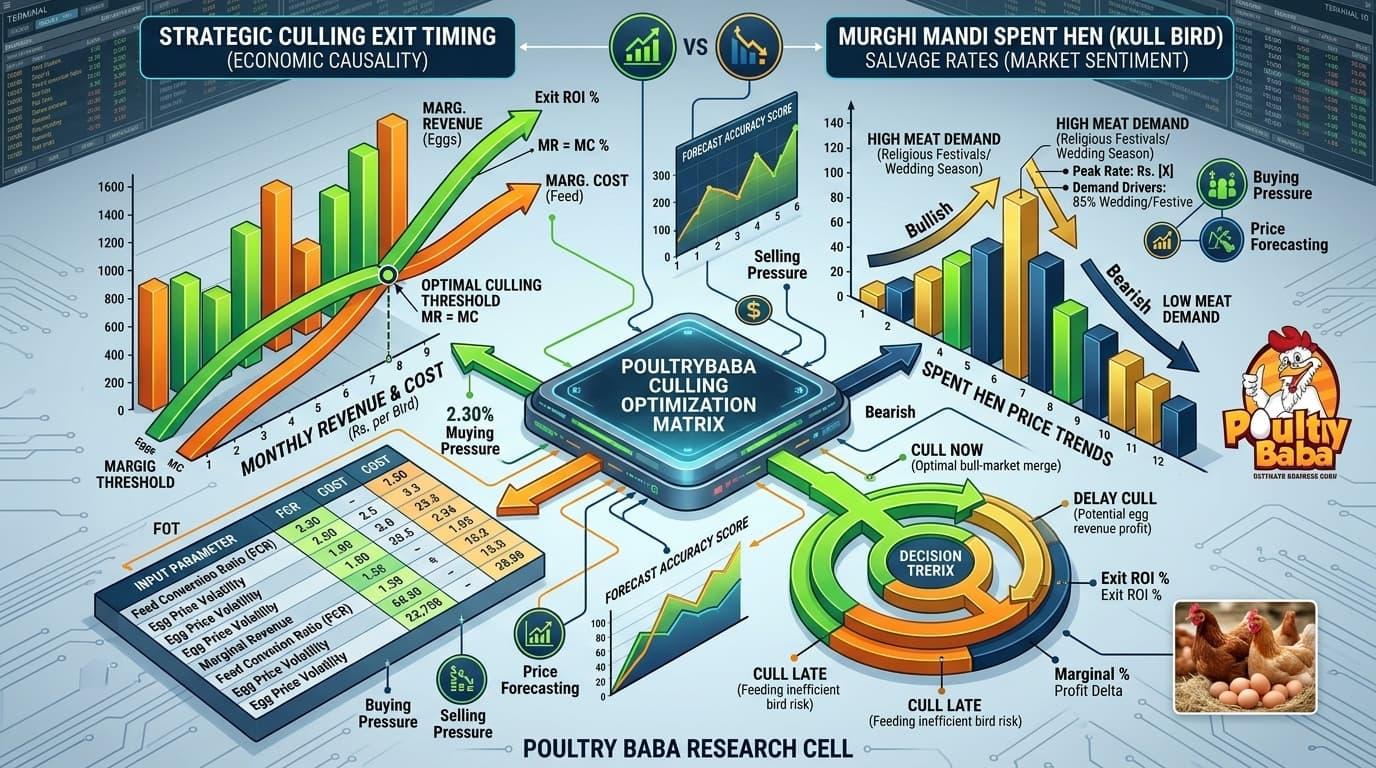
The decision to "Cull" or liquidate a spent flock (Kull Bird) is a strategic exit timing issue. From a B2B economic standpoint, you should cull when the "Marginal Revenue" from eggs falls below the "Marginal Cost" of feed, while the salvage value (spent hen price) in the Murghi Mandi is trending Bullish. Historically, culling bird rates peak during seasons of high meat demand (such as before major religious festivals or the wedding season). Culling too early leaves potential egg revenue on the table; culling too late means feeding an inefficient bird while the meat market turns Bearish.ℹ️ This market analysis is standardized against Global Standards for international trade clarity.
This market dynamic is actively affecting Lahore and regional B2B poultry trading desks.
Detailed Technical Analysis & Market Intelligence
PoultryBaba provides the nation’s only Dedicated Kull Bird Index. By visiting www.poultrybaba.com/rates, you can view city-wise prices for spent hens and analyze interactive weekly graphs to identify the peak liquidity window. Our Poultry Market Intelligence feature helps you forecast when the meat market will be Bullish, allowing you to book your liquidation batch through our GPS-verified buyer network. Don't rely on local brokers who hide the actual mandi sentiment; download the PoultryBaba Application to see real-time "Buying Pressure" for Kull birds. Mastering the exit strategy is just as important as managing the production phase for total market dominance.
Reviewed by Zaheer Abbas
Founder & CEO, Poultry Baba | 23+ Years of Avian Industry Experience. Fact-checked by the Poultry Baba Market Intelligence Cell.