



Embarking on a Profitable Journey: Poultry Farming in Pakistan
The poultry industry in Pakistan stands as one of the most vibrant and rapidly growing sectors, playing a pivotal role in the nation's food security and economy. For aspiring entrepreneurs and seasoned business owners alike, venturing into poultry farming business in Pakistan presents a compelling opportunity. With a soaring population and increasing demand for protein, particularly in Punjab, the market potential is immense.
The Thriving Poultry Landscape of Punjab
Punjab, often called the 'breadbasket' of Pakistan, is also the epicenter of its poultry industry. The province boasts a well-developed infrastructure for poultry, from hatcheries to feed mills and a robust distribution network. Understanding the local market dynamics, especially the daily fluctuations in broiler and egg prices, is paramount for success. Poultry Baba is your go-to source for these critical insights.
Types of Poultry Farming Businesses in Pakistan
Entrepreneurs can choose from several specializations, each with its own investment requirements and operational nuances:
- Broiler Farming: Focusing on raising chickens for meat production. This is typically a short-cycle business (4-6 weeks per batch) offering quick returns.
- Layer Farming: Concentrating on egg production. This requires a longer initial investment period but offers a steady income stream over an extended period.
- Breeder Farming: Involves raising parent stock to produce fertile eggs for hatcheries. This is a more specialized and capital-intensive segment.
Key Steps to Starting Your Poultry Farm
1. Crafting a Solid Business Plan
Every successful venture begins with a well-researched business plan. This should cover projected costs (chicks, feed, housing, equipment, veterinary care), expected revenue, marketing strategy, and potential challenges. Consider various scales, from small-scale backyard operations to large commercial farms.
2. Securing Investment and Farm Setup
Initial capital is essential for acquiring land, constructing sheds, purchasing equipment (feeders, waterers, ventilation systems), and buying your first batch of chicks and feed. Proper housing designed for Pakistan's climate is critical for bird health and productivity.
3. Strategic Sourcing: Chicks, Feed, and Equipment
Reliable sourcing is the backbone of a profitable poultry farm. For day-old chicks (DOCs), partner with reputable hatcheries known for healthy, vaccinated birds. Major players like Big Bird, Hi-Tech, Jadeed, and SB Feeds often have their own hatcheries. Similarly, select high-quality feed from established mills such as Hi-Tech Feeds, National Feeds, Big Bird Feeds, or Asia Feeds, as feed constitutes the largest operational cost. Equipment can be sourced from local manufacturers or specialized suppliers.
Operational Excellence and Mandi Dynamics
Feed Management and Biosecurity
Efficient feed conversion is key to profitability. Monitor feed intake, minimize waste, and ensure a balanced diet. A robust biosecurity plan is non-negotiable. This includes strict hygiene protocols, vaccination schedules, and immediate isolation of sick birds to prevent disease spread. Regular consultations with a veterinarian are vital.
Navigating Mandi Dynamics and Sales
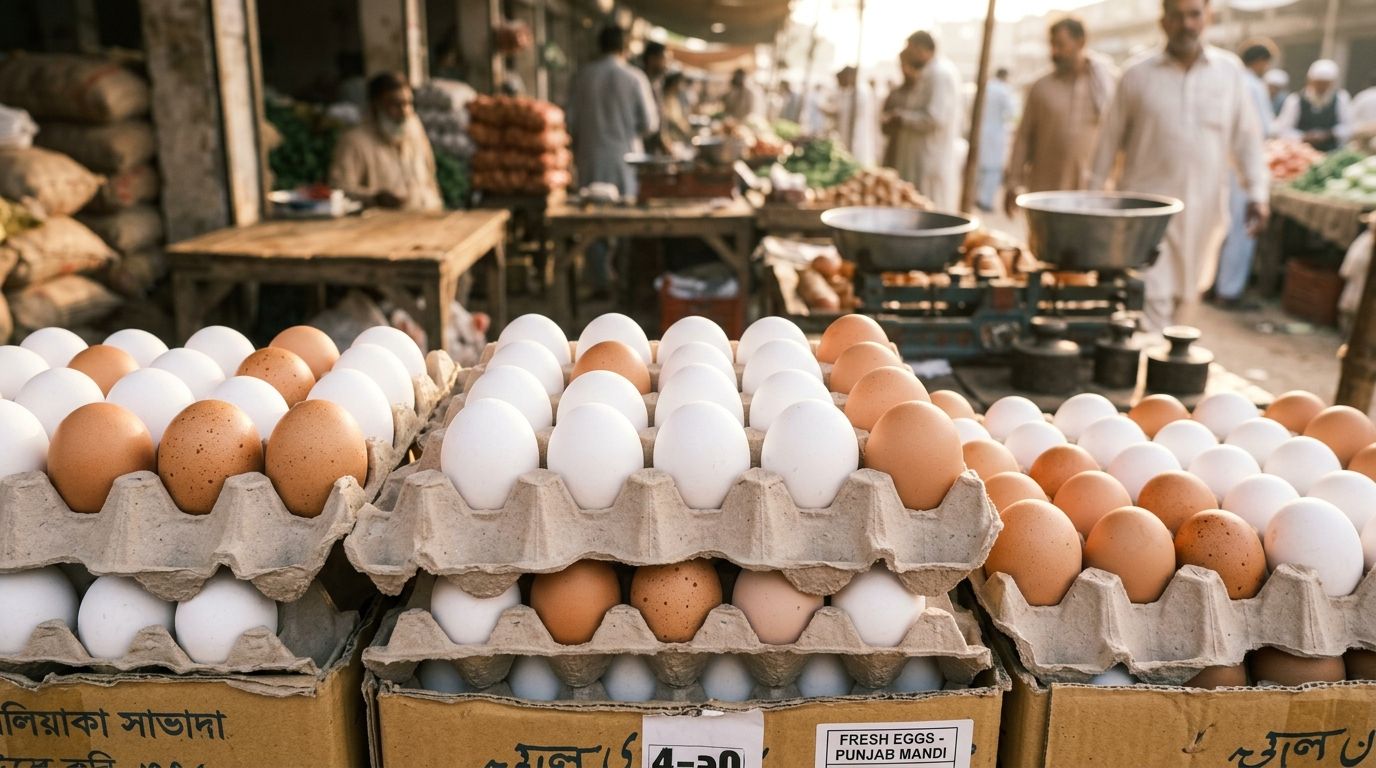
In Punjab, most poultry products are sold through local 'mandis' (wholesale markets) or directly to wholesalers and restaurants. Farmers typically work with 'arthies' (commission agents) who facilitate sales and provide market access. Staying informed about daily mandi rates is crucial for optimal selling prices. Poultry Baba provides up-to-the-minute rates from various Punjab mandis, empowering you to make informed sales decisions.
Establishing direct relationships with local restaurants, hotels, and butcher shops can also fetch better prices and ensure consistent demand for your produce. For egg producers, engaging with bakeries and direct retail channels can be lucrative.
Challenges and Future Outlook
The poultry industry faces challenges such as fluctuating feed prices, disease outbreaks (e.g., Newcastle, Gumboro), and market price volatility. However, with strategic planning, adoption of modern farming techniques, and continuous monitoring of market trends (which Poultry Baba excels at), these challenges can be mitigated. The future of poultry farming in Pakistan remains bright, driven by increasing consumption and government support for the agricultural sector.