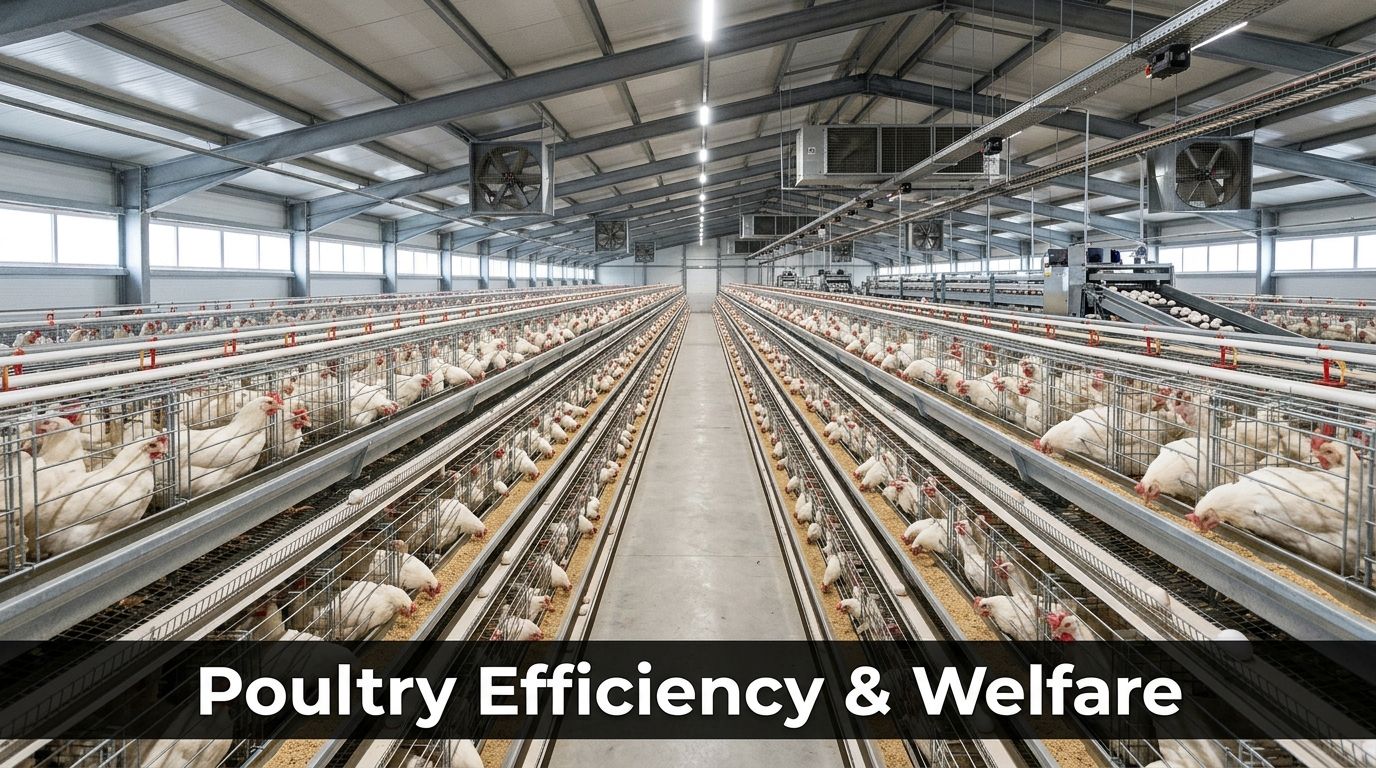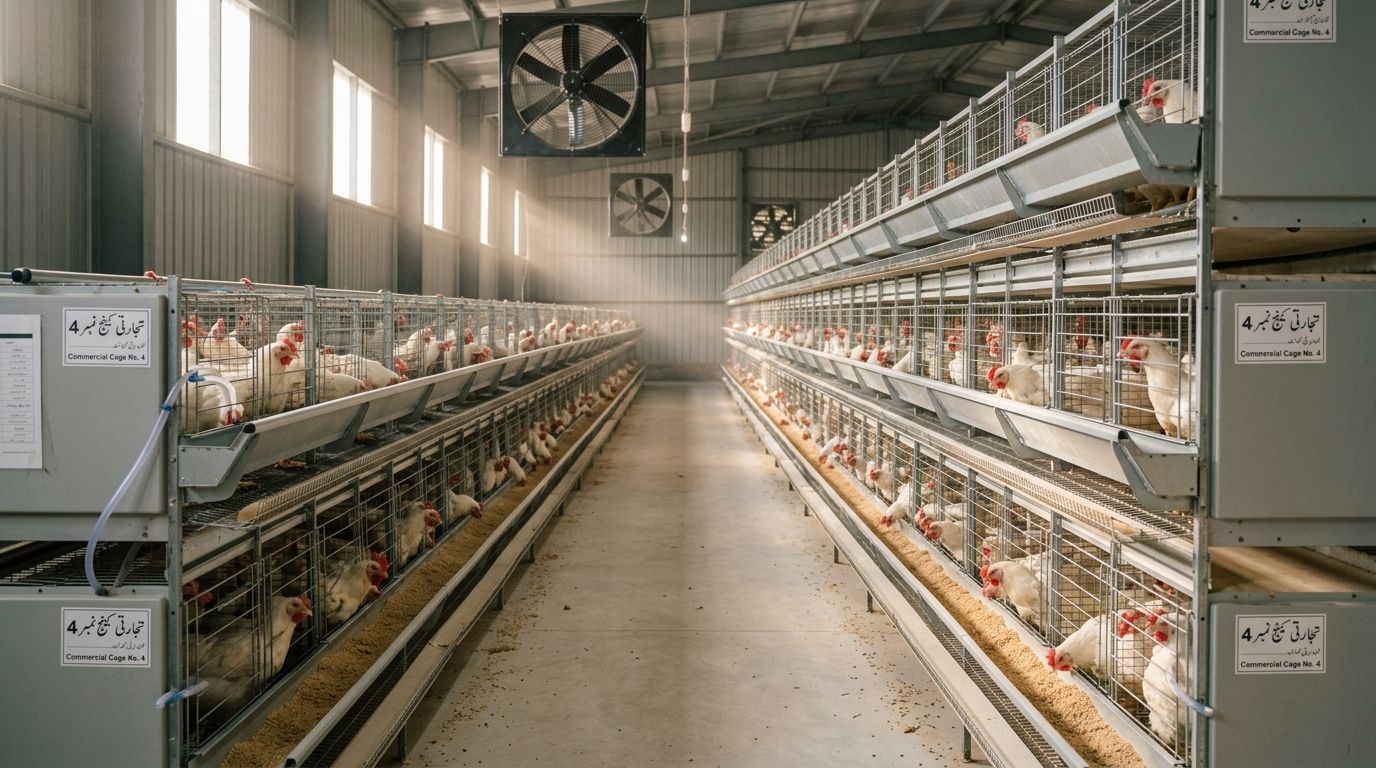
Poultry Feeding System: Types, Performance Impact & ROI Optimization Guide (2026)
Feed accounts for 60–70% of total poultry production costs. According to the Food and Agriculture Organization, feed efficiency is the single most influential factor affecting poultry farm profitability worldwide.
If your feeding system is inefficient, your profit margin is bleeding silently.
This guide breaks down poultry feeding systems using production data, scientific benchmarks, and commercial ROI modeling.
What Is a Poultry Feeding System?
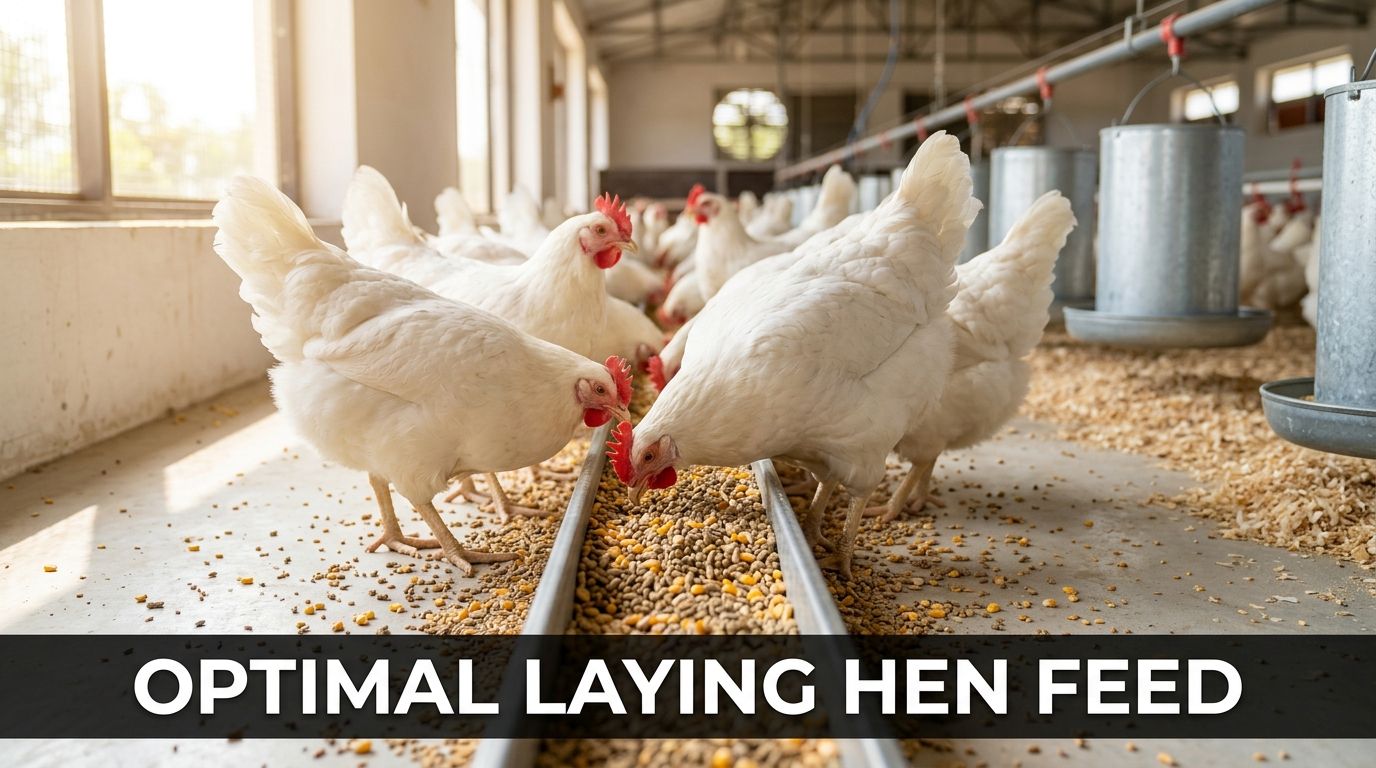
A poultry feeding system is an automated or manual feed delivery mechanism designed to distribute precise amounts of balanced feed evenly across a flock to ensure uniform growth, optimal feed conversion ratio (FCR), and minimal wastage.
Primary goals:
- Flock uniformity
- Reduced feed wastage
- Improved growth rate
- Better survival rate
- Labor efficiency
Why Poultry Feeding Systems Determine Profitability
1️⃣ Feed Efficiency & Growth Performance
The United States Department of Agriculture highlights feed conversion ratio (FCR) as a critical production metric.
Industry Benchmarks:
Poor feeding distribution increases FCR by 0.2–0.4 points — translating into significant feed cost increases.
Study Insight: Diet vs Feeding System Performance
Your referenced trial compared:
Findings:
- No significant difference in final body weight between diets.
- Intensive feeding outperformed semi-scavenging in survival and growth.
Conclusion: Feeding system consistency matters more than marginal protein increases.
Types of Poultry Feeding Systems (Technical Comparison)
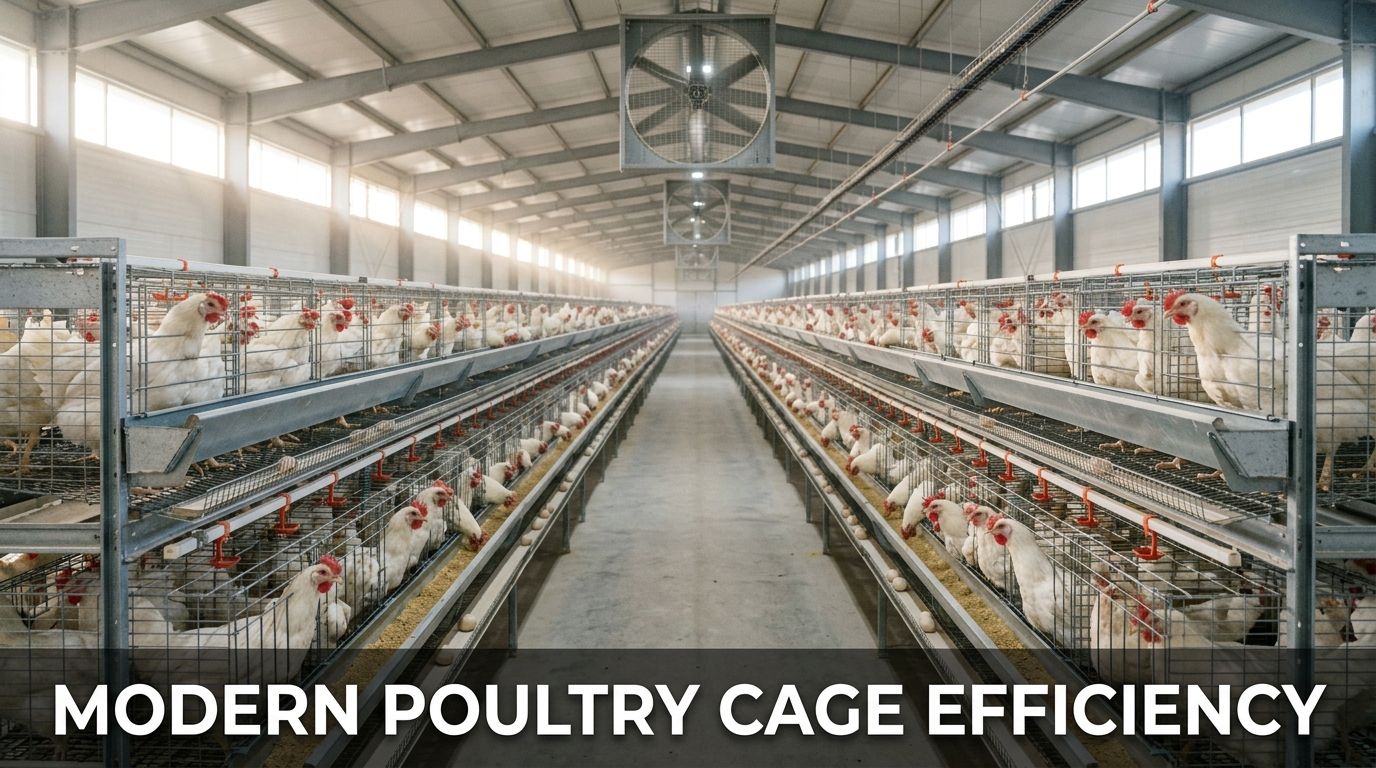
1️⃣ Chain Feeding System
- Delivers measured feed from silo
- Ideal for layer operations
- Requires calibration and maintenance
2️⃣ Automatic Pan Feeding System
- Most popular in broiler farms
- Uniform distribution
- Reduced labor cost
3️⃣ Round & Hanging Tube Feeders
- Lower efficiency
- Higher feed wastage
- Suitable for small-scale farms
Comparison Table: Feeding Systems Efficiency
Technical Performance Benchmarks
Failure to maintain these parameters increases production cost by 8–15%.
Key Advantages of a Proper Poultry Feeding System
✅ Ensures Clean Feed
Protects feed from moisture, contamination, and pathogens.
✅ Pest Protection
Reduces rodent and insect access to feed storage and trays.
✅ Flock Uniformity
Uniform birds → predictable production → stable revenue.
✅ Reduces Feed Wastage
Automated systems reduce spillage by up to 30%.
✅ Labor Optimization
Reduces manpower requirement by 40–60%.
ROI Example: Automation vs Manual Feeding
Assume:
- 20,000 broilers
- Feed cost per bird: $3
- 5% feed wastage (manual)
Loss:
20,000 × $3 × 5% = $3,000 per cycle
Automatic system reducing wastage to 2%:
Savings:
20,000 × $3 × 3% = $1,800 saved per cycle
System cost: $8,000
Payback period: ~4–5 cycles
Integrated Feeding Strategy & Sustainability
The Food and Agriculture Organization promotes sustainable intensification in poultry systems.
Precision feeding:
- Improves nutrient absorption
- Reduces nitrogen waste
- Enhances environmental sustainability
- Reduces antibiotic dependency
What is a poultry feeding system?
A controlled mechanism that distributes feed evenly to ensure uniform growth and feed efficiency.
Best system for broilers?
Automatic pan feeders.
Does feeding system affect growth?
Yes. Intensive, consistent feeding improves growth and survival rates.
FAQ
1. Why is flock uniformity important?
Uniform birds produce consistent output and reduce grading losses.
2. What FCR is considered excellent?
Below 1.6 for broilers.
3. Is higher protein always better?
Not necessarily — feeding consistency matters more.
4. How does automation reduce cost?
Lower wastage, reduced labor, improved FCR.
5. Can small farms benefit from automation?
Yes, especially mid-sized operations scaling up.
6. Does feeder space affect performance?
Yes. Inadequate space increases competition and weight variability.
7. What system is best for local chickens?
Intensive feeding systems during early growth phase.
8. How often should feeders be calibrated?
At least once per production cycle.
Summary Recap
- Feed is 60–70% of poultry cost.
- Feeding systems directly affect FCR and survival.
- Automation improves ROI and uniformity.
- Intensive feeding outperforms semi-scavenging.
- Precision feeding = profitability.
Your feeding system is not infrastructure.
It is a profit control mechanism.