

Understanding Optimal Laying Hen Feed for Global Poultry Success
Laying hen feed constitutes the most significant operational cost in egg production, often accounting for 60-70% of total expenses. Achieving optimal egg production, egg quality, and flock health hinges critically on providing a well-balanced, high-quality diet tailored to the specific physiological needs of laying hens at various life stages. This comprehensive guide explores the intricate science of laying hen nutrition, covering essential nutrient requirements, common feed ingredients, formulation strategies, and global market dynamics impacting feed accessibility and cost.
The global demand for eggs continues to rise, driven by population growth and increasing awareness of their nutritional value. This sustained demand places immense pressure on poultry producers worldwide to maximize efficiency and productivity, with feed playing a central role. As highlighted by the Food and Agriculture Organization (FAO), sustainable and efficient feed production is paramount for global food security, especially concerning livestock and poultry.
The Foundational Nutritional Requirements of Laying Hens
A laying hen's diet must supply adequate energy, protein (amino acids), vitamins, and minerals to support body maintenance, growth, and the demanding process of egg formation. Deficiencies or imbalances can lead to reduced egg production, poor egg quality (thin shells, small eggs), impaired health, and increased mortality.
1. Energy
Energy is crucial for all metabolic processes. Laying hens require sufficient metabolizable energy (ME) for maintenance and egg synthesis. Cereal grains like corn, wheat, and barley are primary energy sources. The energy requirement varies with bird age, body weight, environmental temperature, and production level. For example, hens in colder climates or those with higher egg production rates will have increased energy demands.
2. Protein and Amino Acids
Protein, specifically the amino acids it provides, is essential for tissue maintenance, feather production, and egg protein synthesis. Lysine and methionine are typically the first limiting amino acids in practical laying hen diets. Precision formulation ensures these are provided in adequate amounts, often through ingredients like soybean meal, sunflower meal, and synthetic amino acids. The USDA's Agricultural Research Service frequently publishes research on optimal amino acid profiles for various poultry types, emphasizing their role in maximizing feed efficiency.
3. Vitamins and Minerals
A broad spectrum of vitamins (especially A, D3, E, K, and B-complex) and minerals (calcium, phosphorus, sodium, chloride, manganese, zinc, copper, selenium, iodine) are vital. Calcium is particularly critical for shell formation; a hen lays an egg containing approximately 2 grams of calcium daily, requiring a continuous and high dietary supply. Phosphorus is also essential for bone health and egg production. Trace minerals often need to be supplemented to ensure dietary adequacy.
Evolution of Laying Hen Feed Formulations Across Life Stages
Nutritional requirements change dramatically throughout a hen's life cycle. Modern poultry nutritionists formulate distinct diets for different phases:
- Starter Feed (0-6 weeks): High protein for rapid growth and development.
- Grower/Pullet Feed (6-18 weeks): Moderate protein and energy to support steady growth without excessive fat deposition, preparing the hen for laying. Calcium levels are lower than in layer feed to prevent kidney damage.
- Pre-Lay/Developer Feed (18-20 weeks): A transition diet, slightly increasing calcium and other nutrients to prepare the hen's body for egg production and bone mineralization.
- Layer Feed (20 weeks onwards): High calcium, balanced protein, energy, vitamins, and minerals to sustain high egg production and maintain shell quality. This phase often involves further adjustments (e.g., peak lay, late lay diets).
Typical Nutrient Ranges for Laying Hen Feeds (Global Averages)
While specific formulations vary by breed, climate, and production goals, the table below provides general guidelines for key nutrient ranges across different laying phases. These are based on recommendations from global institutions like the World Organisation for Animal Health (WOAH) and various university extension services worldwide.
| Nutrient | Pullet Feed (6-18 wks) | Pre-Lay Feed (18-20 wks) | Peak Lay Feed (20-40 wks) | Late Lay Feed (>40 wks) |
|---|---|---|---|---|
| Metabolizable Energy (ME, kcal/kg) | 2800-2950 | 2850-2950 | 2900-3000 | 2800-2900 |
| Crude Protein (%) | 15.0-17.0 | 16.0-18.0 | 17.0-19.0 | 16.0-18.0 |
| Calcium (%) | 0.8-1.0 | 2.0-2.5 | 3.8-4.5 | 4.0-4.8 |
| Available Phosphorus (%) | 0.35-0.45 | 0.40-0.45 | 0.40-0.45 | 0.35-0.40 |
| Lysine (%) | 0.75-0.85 | 0.85-0.95 | 0.90-1.00 | 0.80-0.90 |
| Methionine + Cystine (%) | 0.65-0.75 | 0.70-0.80 | 0.80-0.90 | 0.70-0.80 |
Key Ingredients in Laying Hen Feed
A variety of ingredients are used in laying hen feed, chosen for their nutrient profile, palatability, availability, and cost-effectiveness. The selection often reflects regional agricultural production and global commodity prices.
- Energy Sources: Corn, wheat, barley, sorghum, rice, oats.
- Protein Sources: Soybean meal (most common), sunflower meal, canola meal, fish meal, meat and bone meal (where permitted), various pulses.
- Calcium Sources: Limestone (calcium carbonate), oyster shells.
- Phosphorus Sources: Dicalcium phosphate, monocalcium phosphate, defluorinated phosphate.
- Fats/Oils: Vegetable oils (soybean oil, corn oil), animal fats for added energy density.
- Additives: Vitamins and trace mineral premixes, enzymes (e.g., phytase to improve phosphorus utilization), prebiotics, probiotics, amino acids, pigments (e.g., marigold extract for yolk color).
Global Market Dynamics and Feed Price Trends
The price of laying hen feed is inherently linked to global commodity markets, particularly for staple grains and protein sources. Factors influencing these prices include:
- Weather Patterns: Droughts or excessive rain in major producing regions (e.g., US, Brazil, Argentina for corn and soy; Europe for wheat) can cause significant price volatility.
- Geopolitical Events: Conflicts, trade disputes, or policy changes can disrupt supply chains and impact export/import dynamics.
- Energy Costs: Rising fuel prices increase transportation costs for raw materials and finished feed.
- Currency Fluctuations: Exchange rates affect the cost of imported ingredients.
- Disease Outbreaks: Avian influenza or other animal diseases can affect demand and supply, indirectly influencing feed markets.
According to the USDA Economic Research Service (ERS), global feed prices have shown significant fluctuations in recent years, impacting the profitability of poultry operations worldwide. Producers often mitigate this by diversifying ingredient sourcing, forward contracting, and optimizing feed conversion ratios.
Feed Management Practices for Enhanced Performance
Beyond formulation, effective feed management is vital for realizing the full genetic potential of laying hens:
- Storage: Store feed in a cool, dry, well-ventilated area to prevent spoilage, mold growth, and rodent contamination. FIFO (First In, First Out) principle should be applied.
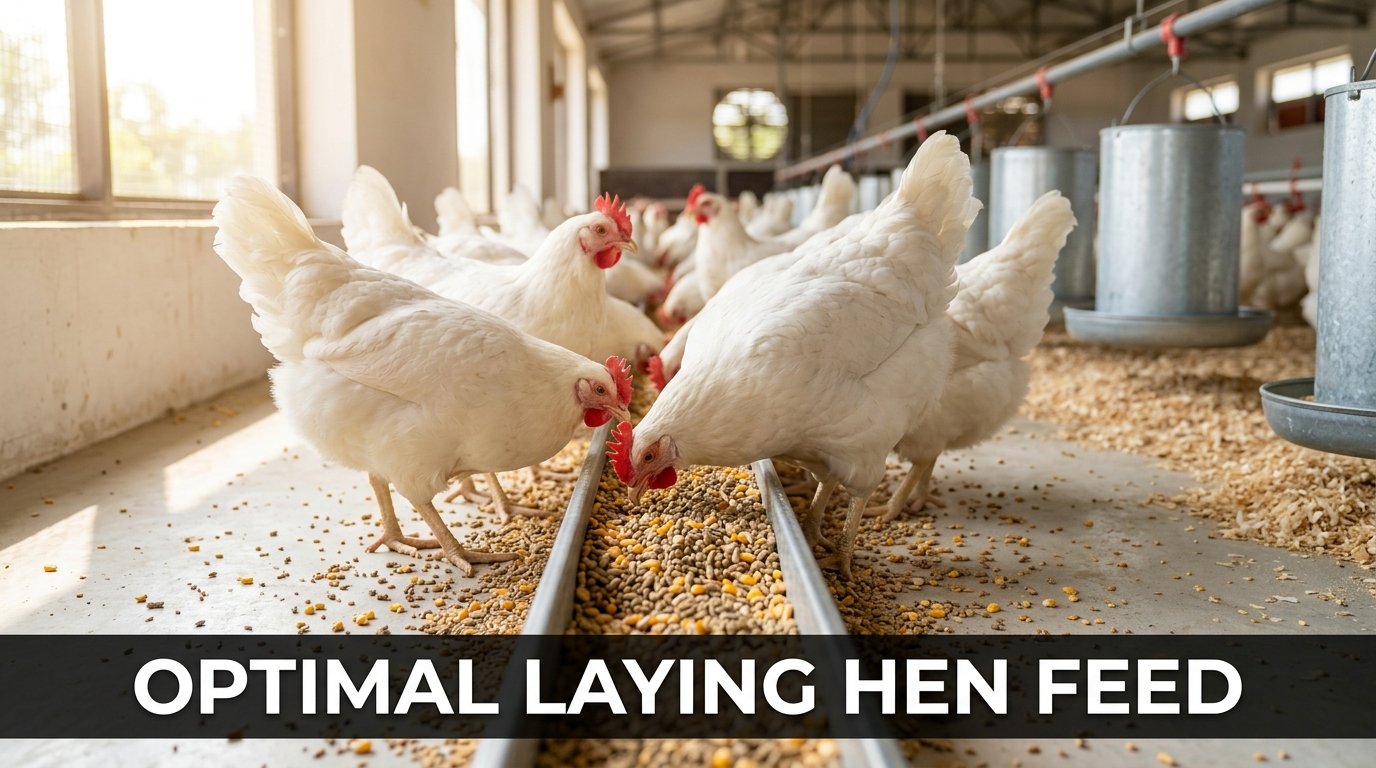
- Accessibility: Ensure all hens have ample and equal access to feed. Adequate feeder space prevents competition and ensures uniform intake.
- Intake Monitoring: Regularly monitor feed intake. Drops can indicate disease, environmental stress, or feed quality issues.
- Water Quality and Availability: Water is as crucial as feed. Hens consume twice as much water as feed by weight. Clean, fresh water must be continuously available.
- Feed Presentation: Proper feed particle size encourages consumption and reduces waste. Mash, crumbles, or pellets are common forms.
Sustainable and Alternative Feed Ingredients
With increasing global pressure for sustainable agriculture, research into alternative feed ingredients is intensifying. This includes:
- Insect Meal: Black soldier fly larvae meal is a promising protein source, offering a sustainable alternative to traditional protein meals.
- Algae Meal: Can provide protein, lipids, and pigments.
- Single Cell Proteins (SCPs): Proteins derived from microorganisms (yeast, bacteria) cultivated on various substrates.
- By-products: Utilizing agro-industrial by-products (e.g., distillers dried grains with solubles - DDGS) can reduce waste and feed costs, though their nutritional variability requires careful management.
The European Food Safety Authority (EFSA) plays a key role in evaluating the safety and efficacy of novel feed ingredients, facilitating their adoption in sustainable poultry production systems.
Conclusion: The Future of Laying Hen Feed
The science of laying hen nutrition is dynamic, continually evolving to meet the demands of improved genetics, consumer preferences, and environmental sustainability. From precise nutrient balancing tailored to specific life stages to the exploration of novel, eco-friendly ingredients, the focus remains on optimizing feed efficiency, minimizing costs, and ensuring animal welfare. Global poultry producers who prioritize a deep understanding of laying hen feed, coupled with agile adaptation to market shifts and technological advancements, will be best positioned for long-term success in the competitive egg industry. This holistic approach to feed management is not just about feeding birds; it's about nurturing a resilient and productive global food system.